What Not To Say to Sexual Violence Survivors (And What Should be Said Instead)
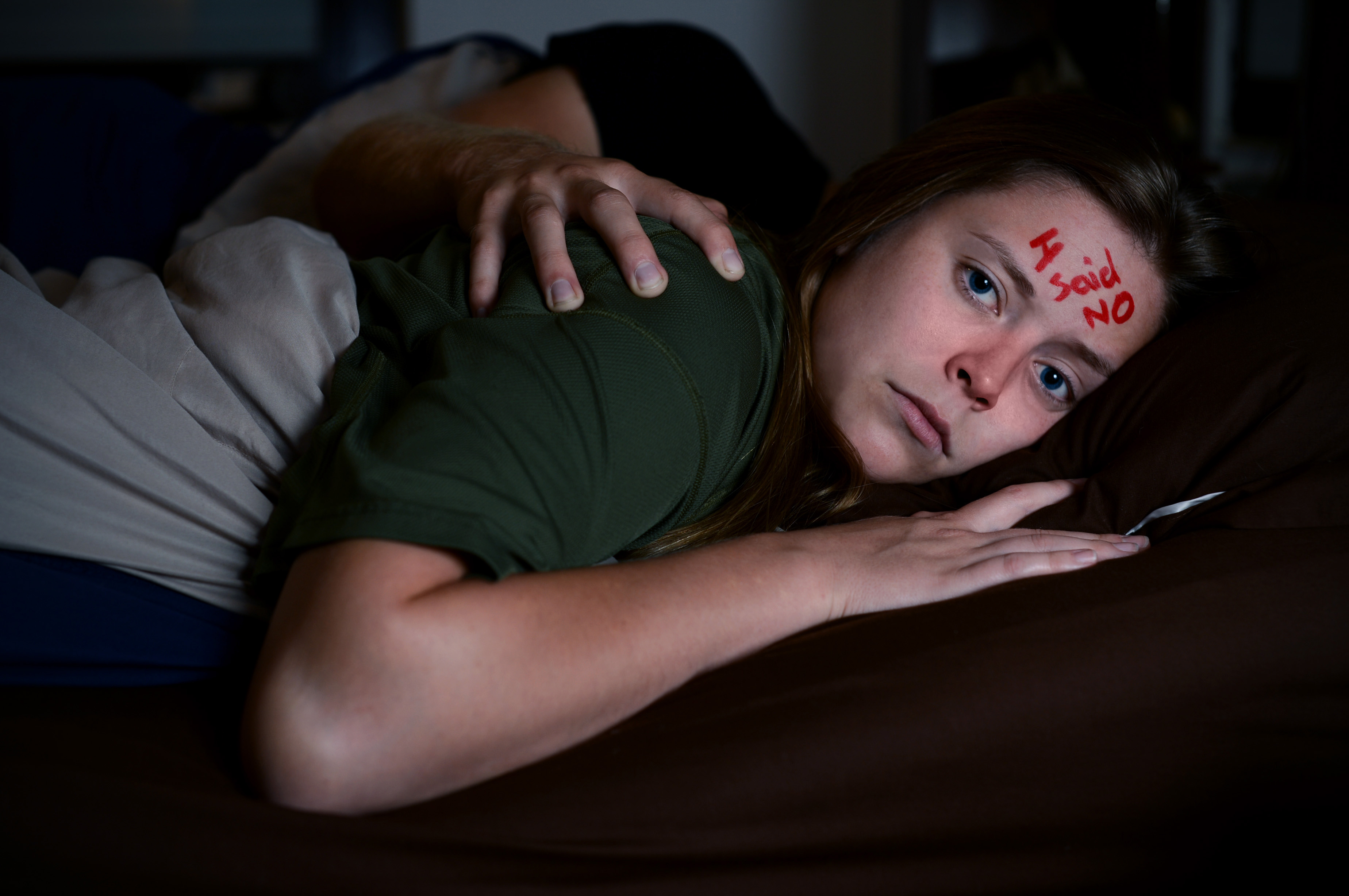
In her guest post on Sarah Bessey's amazing blog, 21 Things that Shouldn't be Said to Sexual Abuse Victims, Mary DeMuth (2014) has taken a time to outline in clear and simple terms an extensive list of things that folks should avoid saying to sexual violence survivors. I really appreciate her post, particularly as I think I have heard them all. Her list include the following:
"One. That was so long ago, why can’t you just get over it?" (A past favorite in my family-- thanks for all of the empathy, by the way);
"Two. Are you sure it happened?" (Um yes-- but also a past favorite of family members and even close friends in the past-- I still do not entirely understand the logic behind this one-- no, I did not mistake this for something else or create new fun memories in my head, but thank you for your genuine concern);
"Three. If you talk about it so much, you’ll never heal." (aka, please stop talking about it, I can't handle hearing about it-- sorry, mom, but it has been much harder for me to live than it has been for you to hear about-- and you are a part of what happened to me, not merely by choosing the man who first raped me as your spouse, but also by not listening, empathizing or teaching me to believe in or stand up for myself);
"Four... What doesn’t kill you makes you stronger." (I believe this one is meant to be a compliment-- yet it's not; it is rationalizing what happened and trying to feel more comfortable with it while asking the victim or survivor-- or how they choose to identify-- as well);
"Five. I could never go through what you went through." (Cool-- why is it that this turns back to you, however? You can simply call a person strong without making them feel unrelatable and alone);
"Six. That perpetrator must live with such awful regret." (That would be nice, wouldn't it? I would also like a unicorn for Christmas this year, but I'm not holding my breath);
"Seven. That’s how men act. It’s normal." (Wasn't this what people said to excuse Kavanaugh as well? Yikes. While I had my doubts early on with no way of knowing any different and while sexual violence is more common than most people realize, I learned this is not normal at all);
"Eight. So and so forgave her abuser; it was easy." (My mom likes this one as well-- I also think some people have a different understanding of what forgiveness looks like than I do-- forgiveness does not mean inviting toxic people back into your life-- it means no longer hating them or wishing them any harm in general-- it can and often does involve praying for them or internally sending them well wishes when we think of them-- but you can still feel upset about what happened and what could and perhaps should have been instead-- not being harmed by them; in any case, it is from a lofty place that people think they have the right to drop hints about forgiving one's own rapist/s);
"Nine. It’s just sex." (Ugh... if only this were true, my life would be so much easier-- it was repeated emotional torture and what felt like emotional murder over and over again as well; take a look at how sexual violence impacts folks in the long term for further details on this);
"Ten. But was it full sexual abuse? He just leered? That’s it?" (I can't dignify this with even an internal response);
"Eleven. Was the perpetrator drunk? Were you?" (I smell victim blame and efforts to normalize sexual violence here);
"Twelve. Well, what were you wearing?" (this one is among the worst in my book-- I was wearing a sweater with a button down shirt underneath it and jeans during one of the most horrific times I was raped, by the way); but I digress-- DeMuth continues:
"Thirteen. Did you flirt? What did you expect?" (Hmm, not to get raped, as much as anyone else would expect);
"Fourteen. Why didn’t you tell me before?" (One of my infamous responses: 'well, mom, because you didn't believe me nearly twenty years later so I strongly doubt you would have believed me then');
"Fifteen. Hmmm, but you look normal." (I'm sorry you do not see me as 'normal'-- I am incredibly strong if that is what you mean-- but not 'abnormal');
"Sixteen. Just stop thinking about it." (my mom used to use this one often, but has recently stopped after several requests over the years-- in short, I can't; it would be nice, but I can't-- please read up on PTSD sometime and also please stop asking me to make you feel more comfortable because you no longer want to hear about it-- this sends the message that you don't care);
"Seventeen. It could have been worse. (Insert worse sexual abuse story here)." (One upping and downplaying the experiences of others is never helpful-- and I knew this long before becoming a therapist, so I'm pretty sure this is common knowledge);
"Eighteen. Oh, I understand totally. (No, you don’t)." (I heard this one from a man who was completely out of touch with the situation-- and despised him for being so arrogant, dismissive and utterly incorrect);
"Nineteen. You sure you didn’t make this up to get attention?" (Wow-- and yep, I'm pretty sure I didn't make this up-- please refer to my response to number two on this list for further details);
"Twenty. Well, why didn’t you (insert thing you should have done here)?" (Mom loved this one as well for several years-- I don't know-- would you ask a Holocaust victim the same thing? I would hope not, because that would be implying they are to blame, which is unspeakably painful, unfair and unhelpful) and
"Twenty-One. This was part of God’s plan, so you’ll have to make your peace with it" (DeMuth, 2014) (which is also awful-- people should never think it is their place to tell anyone to make peace with anything they themselves did not survive and thus do not fully understand).
Though a full list could never be fully covered, as new awful and unexpected remarks continue to come up as time moves forward, I would also add to DeMuth's list:
Twenty-Two. [Laughter] "I cannot believe someone could be raped so many times" (Yes, this came from someone I thought was a close friend-- and was devastated for years after);
Twenty-Three. "I wish you wouldn't talk about it-- it makes me feel uncomfortable/ hurts too much to hear about this" (Otherwise known as several items listed above stated in a more direct manner, which I suppose I should appreciate, but I did not-- if my lived experience makes my mother or someone who claims to be incredibly close to and supportive of me uncomfortable, that is an issue they need to process-- not me);
Twenty-Four. "Where were you?" (A variation of 'what were you wearing?' aka 'please tell me it couldn't happen to me too);
Twenty-Five. "I still think he is going to Heaven" (Good for you-- please keep this to yourself-- even if I don't want him 'to go to Hell,' I don't need to hear about this; it isn't helpful at all);
Twenty-Six. "Well he raped me too and I still see him" (This is especially unacceptable from mothers toward their children-- again, thanks, Mom);
Twenty-Seven. "Have you been tested for diseases?" (Yep, but thanks for making me feel utterly disgusting on top of traumatized and damned-- could we be just a little more mindful and delicate?);
Twenty-Eight. "How long ago was it?" (This implies we should not still be upset, along with several other items on this list, which is both apathetic and again, unhelpful);
Twenty-Nine. "Can you think of something good?" (A thinly veiled variation of why can't you just get over it/ stop thinking about it-- yes, I can-- but I have a right to my feelings as well);
Thirty. "At least you're still alive." (Thanks again for the empathy-- I acknowledge this more than the people who said this realize however-- again, not helpful);
Thirty-One. "I know it will hurt like hell, but I need you to share the details of what happened to you so we can understand." (These words still feel like daggers. Yes, yes-- it did and does hurt, more than words can capture but no, unless you are a detective or lawyer seeking to help me or to defend the men who hurt me in court, I do not need to share details with you-- this is an incredibly private and painful thing to ask from a person-- especially family-- sadly I did cave into this request years ago to no avail and I wish I had not had to relive my story for the sake of appeasing them);
Thirty-Two. "But he got saved." (Okay. This does not change what he did however and it is inappropriate to ask a survivor to see their abuser for the sake of making others feel more comfortable);
Thirty-Three. [Any sexual abuse joke or remark denigrating survivors who have come forward, like Dr. Ford]. (I would hope an explanation is not needed for this, but in case one is, it feels personal and like an attack on us).
Again, there is more-- a fully complete list would be much longer, but these are some of the tops for me. A special thanks again to Sarah Bessey for sharing her guest post, 21 Things that Shouldn't be Said to Sexual Abuse Victims, and to Mary DeMuth (2014) for starting this list, as several survivors can benefit through feeling validated and those who wish to support (or at least not hurt or upset) survivors can benefit as well.
What should we say or do?
My amazing doula once noted that she assumes all of the women she serves have survived sexual abuse, as child sexual abuse alone impacts one in four females and one in six males before they reach adulthood (National Sexual Violence Resource Center, NSVRC, 2018) and this makes sexual violence even more likely in adulthood (NSVRC, 2012). How would one treat a woman who has survived sexual abuse differently? With even more mindfulness, respect and empathy, one would imagine, which is a good practice overall. Heading age-old advice, we should treat people how we would want to be treated if roles were reversed and we were walking in their shoes-- would we want to be dismissed or told to get over it? Would we want to be forced to see our abuser for holidays and special events to make others feel more comfortable? Would we want to hear that someone "totally gets it" when they do not? Probably not.
A list of responses I recommend (if they truly reflect support):
One. "Thank you for sharing your story. It is powerful and I am honored."
Two. "It was incredibly brave of you to share this and I really admire that."
Three. "I'm so sorry you have had to endure that. It is truly unacceptable and awful."
Four. "No one should have to go through this alone. Please know I believe you and I am here for you."
Five. "You have my full support. I am with you and not with him. Please let me know if there are ways I can better help and support you."
Six. "I love you."
Seven. "Sexual violence is a very serious problem that society needs to work harder to address. Your story has helped me want to do this-- survivors like yourself should be supported."
Eight. "No one deserves what you have had to endure."
Nine. [When normal responses to trauma come up]:"It is okay and perfectly normal to feel this way. You are reacting normally to an abnormal situation. I imagine I would be angry/hurt/disappointed/furious/sad/devastated/etc. as well."
Ten. "You are an incredible woman/human being/ man."
Eleven. "I know you are a courageous, badass force to be reckoned with, but I am here for you if you just want to cry or talk sometime. I imagine that even badass forces to be reckoned with need a shoulder to cry on sometime."
Twelve. "I am thankful you are still here in spite of all that you have survived. While I know I cannot fully appreciate how much you have suffered, I know this could not have been easy."
Thirteen: "While I do not understand what it is like to have survived these experiences, I understand this can be traumatic. I hope you have not thought of hurting yourself (although this is a normal response to trauma that would be understandable). Please know I am here for you, [as are these community resources, for example]. Is this something you struggle with and would like to talk about? Because if it is, I want to help you. Now or anytime you want to talk."
If you or someone you love is experiencing a flashback, a cold glass of water can also help, as can reminding yourself or someone you love that the worst is over, remembering your present day and location, breathing, changing locations, and/or picturing your memories as a television that you can change the channel on with a remote. (I still like a cold glass of water myself).
In the meantime, especially to all of you amazing survivors out there, please feel free to add your own recommendations to these lists!
References
DeMuth (2014). 21 things that shouldn't be said to sexual abuse victims. Retrieved November 24, 2018 from http://sarahbessey.com/21-things-shouldnt-said-sexual-abuse-victims-guest-post-mary-demuth/
National Sexual Violence Resource Center (2012). Sexual revictimization: Research brief. Retrieved November 24, 2018 from https://www.nsvrc.org/sites/default/files/2012-06/publications_NSVRC_ResearchBrief_Sexual-Revictimization.pdf
National Sexual Violence Resource Center (2018). Get statistics: Sexual assault in the United States. Retrieved November 24, 2018 from https://www.nsvrc.org/statistics

No comments:
Post a Comment
Please remember to be respectful to all other commenters in your feedback, especially as much of this content involves sensitive material. Using the golden rule and treating others as you would want to be treated is an excellent place to start. Cheers.